
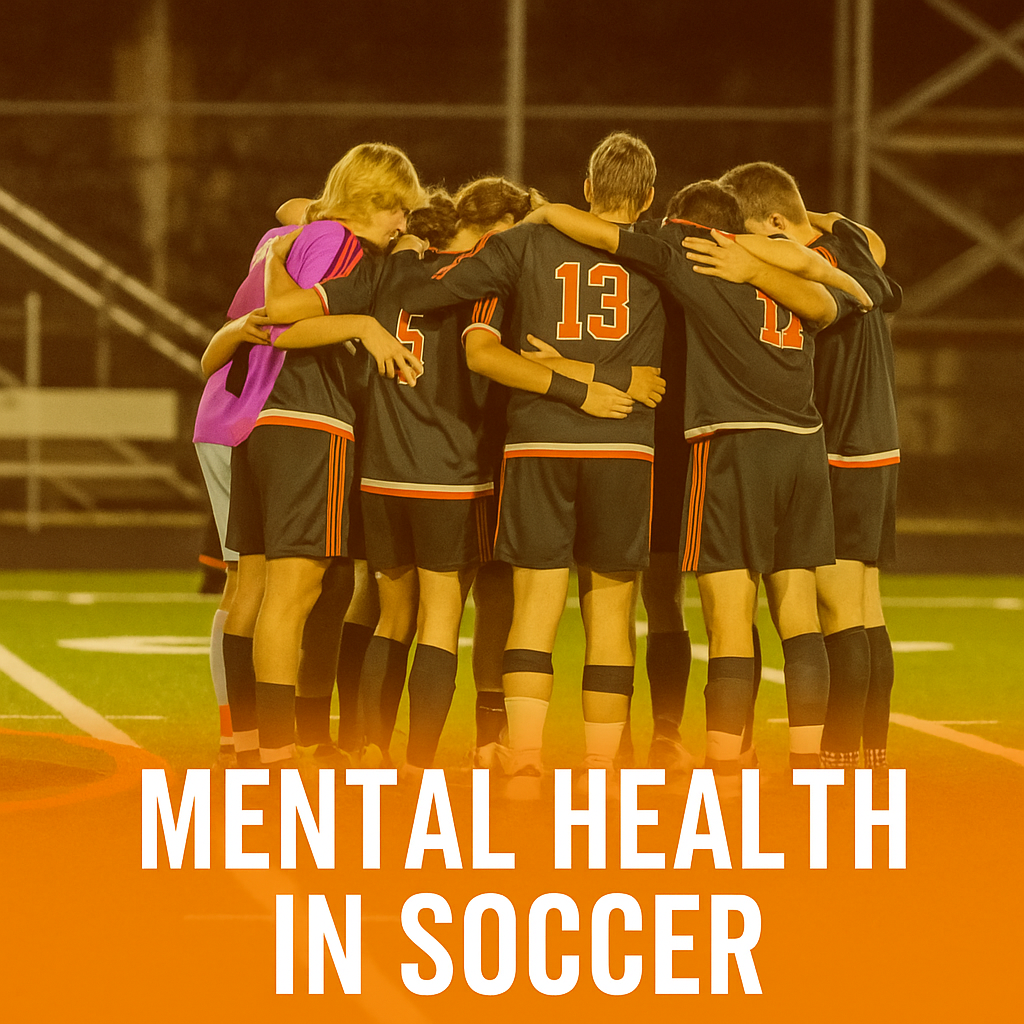
Mental Health in Soccer deserves the same attention we give to conditioning, tactics, and skill work. On World Mental Health Day, we’re sharing practical tools for players, coaches, and parents to build resilience on and off the field.
Why Mental Health in Soccer matters for high school athletes
Soccer is more than a game; it’s a major part of many students’ lives. Practices, travel, schoolwork, and social pressures can stack up quickly. The NFHS highlights that stress and anxiety frequently affect performance and well-being. Recognizing mental wellness as a core element of development helps athletes stay confident, coachable, and consistent across a long season.
Common challenges student-athletes face
- Performance anxiety: Big crowds and rivalry games can spike nerves and decision-making errors.
- Burnout: Dense schedules and limited recovery time drain energy and motivation.
- Identity pressure: When “how I played” becomes “who I am,” setbacks feel personal.
- Social media stress: Constant comparison and feedback loops add extra pressure.
Bringing these topics into normal team conversations reduces stigma and encourages athletes to ask for support sooner.
Resilience tools players can use today
- Set process goals: Track clear, controllable targets—completed passes, recovery runs, communication—so progress isn’t defined only by wins.
- Create a pre-game routine: Two minutes of box breathing, quick visualization of first actions, and a short positive cue (“first touch forward”).
- Build recovery into the week: Sleep, hydration, and a 10-minute stretch/mobility block after practice protect both body and mind.
- Use reset cues during matches: After a mistake, employ a simple reset: exhale, clap, eye contact with a teammate, next-play focus.
- Ask for help early: Talking to a coach, trainer, counselor, or trusted adult is a strength move that supports long-term performance.
How coaches and parents can support Mental Health in Soccer
- Emphasize effort and learning: Praise pressing, tracking, and shape—things players control—alongside results.
- Normalize check-ins: A casual “How’s your week?” invites real answers before stress piles up.
- Model balance: Encourage planning for schoolwork around away games and celebrate small wins off the field.
- Protect recovery windows: Honor team curfew and post-match cooldowns to lower injury risk and mental fatigue.
Helpful resources
- 988 Suicide & Crisis Lifeline – free, confidential 24/7 support
- National Alliance on Mental Illness (NAMI) – education and local resources
- NFHS: Mental Training for Performance – practical tools for athletes
Our Wildcats commitment
At Greater Latrobe, we’re committed to a culture where athletes can thrive physically and mentally. That includes open conversations about stress, simple routines that steady performance, and celebrating resilience as much as result. When we support Mental Health in Soccer, we develop better teammates—and stronger people.
Related posts: Manage Game Day Nerves in Soccer | More Than a Game: Soccer and Youth Mental Wellness | Mental Strength: What Soccer Teaches About Toughness
Comments